The Ultimate Guide to Mastering the Game
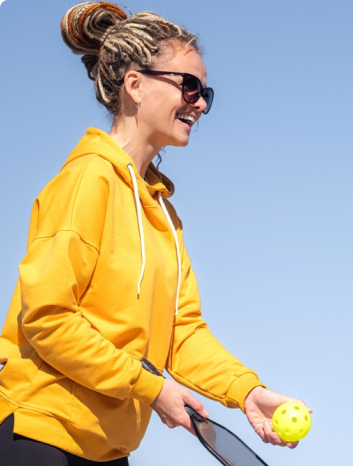
Welcome to your comprehensive resource on pickleball, the fastest-growing sport in the United States! Whether you're a beginner or an experienced player looking to refine your skills, this guide will provide you with everything you need to know about the exciting world of pickleball.
Sed ut perspiciatis unde omnis iste natus error sit voluptatem accusantium doloremque laudantium, totam rem aperiam, eaque ipsa quae ab illo inventore veritatis et quasi architecto beatae vitae dicta sunt explicabo. Nemo enim ipsam voluptatem quia voluptas sit aspernatur aut odit aut fugit, sed quia consequuntur magni dolores eos qui ratione voluptatem sequi nesciunt. Inventore veritatis et quasi architecto beatae vitae.
Popular
Sed ut perspiciatis unde omnis iste natus error sit voluptatem accusantium doloremque laudantium, totam rem aperiam, eaque ipsa quae ab illo inventore veritatis et quasi architecto beatae vitae dicta sunt explicabo. Nemo enim ipsam voluptatem quia voluptas sit aspernatur aut odit aut fugit, sed quia consequuntur magni dolores eos qui ratione voluptatem sequi nesciunt. Inventore veritatis et quasi architecto beatae vitae.
Sed ut perspiciatis unde omnis iste natus error sit voluptatem accusantium doloremque laudantium, totam rem aperiam, eaque ipsa quae ab illo inventore veritatis et quasi architecto beatae vitae dicta sunt explicabo. Nemo enim ipsam voluptatem quia voluptas sit aspernatur aut odit aut fugit, sed quia consequuntur magni dolores eos qui ratione voluptatem sequi nesciunt. Inventore veritatis et quasi architecto beatae vitae.
History
Pickleball was invented in 1965 on Bainbridge Island, near Seattle, Washington. The game was created by three friends - Joel Pritchard, Bill Bell, and Barney McCallum - as a way to entertain their families during the summer. The name "pickleball" has a couple of disputed origins; some say it was named after Pritchard's dog, Pickles, who would chase after the ball, while others claim it was named after the term "pickle boat," referring to the last boat to return with its catch in rowing.
paddle
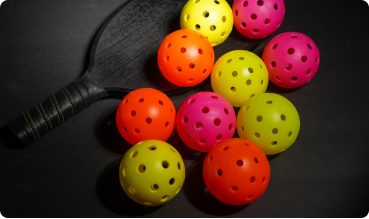
Pickleball paddles are made from wood, composite, or graphite. They are larger than ping-pong paddles but smaller than tennis rackets.
Ball
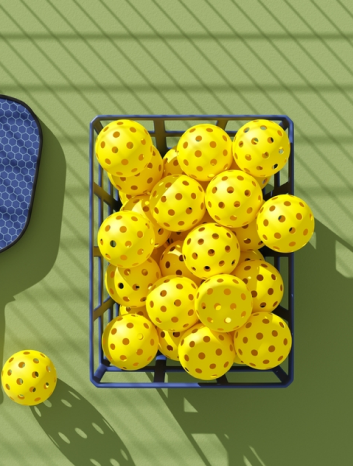
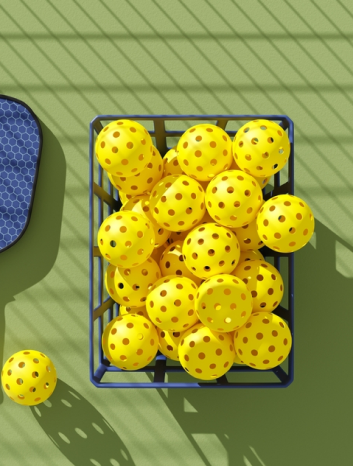
The ball used in pickleball is similar to a wiffle ball, made of durable plastic with holes.
Net
The net is 36 inches high at the sidelines and 34 inches high in the middle.
Court
A pickleball court measures 20 feet by 44 feet, similar to a badminton court.
Dinking
A dink is a soft shot that is intended to arc over the net and land in the opponent's non-volley zone. This shot is crucial for setting up offensive plays.
Volleying
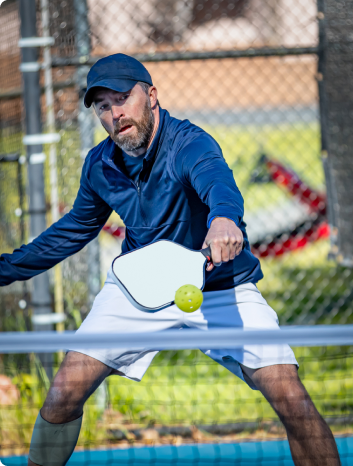
Striking the ball in the air before it bounces is called volleying. This is a key skill for taking control of the net and putting pressure on your opponents.
Third Shot Drop
After the serve and return, the third shot is often a "drop shot" aimed at landing softly in the non-volley zone, allowing the serving team to approach the net.
Positioning
Good court positioning is essential. In doubles, players should work in tandem, moving together and covering their respective sides of the court.
Serving
The serve must be made underhand, and the ball must be hit below the waist. The serve is diagonal, and the ball must land in the opposite service court.
scoring
Games are typically played to 11 points, and you must win by 2 points. Only the serving team can score points.
Double Bounce Rule
After the serve, each side must let the ball bounce once before volleys are allowed.
Non-Volley Zone
Also known as "the kitchen," this is a 7-foot zone on both sides of the net. Players cannot volley the ball (hit it in the air) while standing in this zone.
call the lines
Clearly call out balls that are in or out. If unsure, the benefit of the doubt goes to the opponent.
Serve Rotation
In doubles, partners should alternate serving each time their team regains the serve.
Respect
Respect your opponents and the rules of the game. Good sportsmanship is a cornerstone of the pickleball community.
Spin Shots
Adding spin to your shots can make them more difficult for opponents to return.
Erne Shot
A shot where a player jumps from outside the non-volley zone to hit a volley shot, then lands outside the zone.
Lobbing
A high, arcing shot that goes over your opponent's head, designed to push them away from the net.
Accessibility
Pickleball is easy to learn, making it accessible to players of all ages and skill levels.
Physical Benefits
It's a great way to stay active, improve coordination, and enhance cardiovascular health.
Social Aspect
Pickleball is known for its friendly and welcoming community, making it a great way to meet new people and socialize.
Competitive Play
For those looking for a challenge, there are numerous tournaments and competitive leagues available.
Pickleball for All Ages
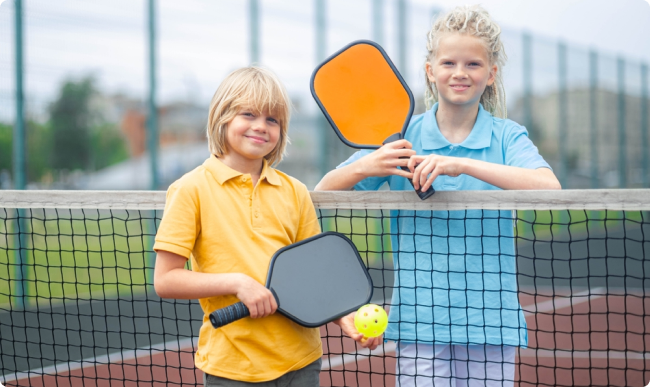
One of the great things about pickleball is its accessibility. It's a sport that can be enjoyed by people of all ages and skill levels. From young children to seniors, pickleball offers a fun and social way to stay active.
Conclusion
Pickleball is more than just a game; it's a community. Whether you're playing for fun or competition, the sport offers a unique blend of strategy, skill, and camaraderie. So grab your paddle, hit the courts, and join the millions of players who have already discovered the joy of pickleball!
Pickleball Drills and Practice Tips
Improving your pickleball game requires consistent practice and focused drills. Here are some effective drills and tips to help you enhance your skills on the court:
Serving Drills
-
Volley Ladder: Start close to the net and hit a volley, then take a step back and hit another volley. Continue moving back with each volley until you reach the baseline, then move forward again.
-
Rapid-Fire Volleys: Have a partner feed you quick, consecutive volleys. This improves your reaction time and hand-eye coordination.
Volleying Drills
-
Target Practice: Set up targets in different areas of the service box and practice hitting them with your serve. This will improve your accuracy and consistency.
-
Deep Serve Drill: Aim to serve the ball as close to the baseline as possible without going out. This puts pressure on your opponent and gives you an advantage.
Dinking Drills
-
Crosscourt Dinks: Practice hitting soft, controlled dinks diagonally across the court. Aim to land the ball in the opponent's kitchen area.
-
Dink Rally: Engage in a rally with a partner, focusing solely on dinking. This helps develop touch, control, and consistency.
Third Shot Drop Drill
-
Drop Shot Practice: From the baseline, practice hitting your third shot so that it gently arcs over the net and lands in the opponent's kitchen. This is a crucial shot for transitioning to the net.
Footwork Drills
-
Ladder Drills: Use an agility ladder to practice quick footwork patterns. This improves your ability to move efficiently on the court.
-
Shadow Footwork: Without a ball, practice moving to different areas of the court as if you were playing a point. Focus on your stance, balance, and quickness.
Practice Tips
-
Consistency is Key: Regular practice sessions are more effective than occasional long sessions. Aim for short, focused practices several times a week.
-
Focus on Weaknesses: Identify areas of your game that need improvement and dedicate time to practicing those specific skills.
-
Play with Different Partners: Playing with various partners exposes you to different playing styles and challenges, helping you adapt and improve.
-
Record and Review: If possible, record your practice sessions or matches. Reviewing the footage can help you identify areas for improvement.
By incorporating these drills and tips into your practice routine, you'll be on your way to becoming a more skilled and confident pickleball player.
Pickleball Strategy and Tactics
Mastering the strategies and tactics of pickleball can give you a competitive edge on the court. Here are some key concepts and strategies to help you outsmart your opponents:
The Importance of the Soft Game:
-
Control the Net: The team that controls the net usually controls the game. Use soft shots like dinks to move your opponents around and create openings for winning shots.
-
Patience is Key: Avoid the temptation to hit hard shots too early in the rally. Instead, wait for the right opportunity to attack.
Positioning and Court Coverage:
-
Stay Centered: In doubles, positioning yourself and your partner in the center of your respective court halves can help cover the most ground.
-
Cover Your Partner: If your partner is pulled out of position, shift your position to cover the open area of the court.
Shot Selection
-
Use a Variety of Shots: Mix up your shots to keep your opponents guessing. Use drives, lobs, and drop shots to create a diverse game.
-
Know When to Attack: Look for opportunities to attack when your opponents are out of position or when you receive a high ball near the net.
Serve and Return Strategies
-
Deep Serves: Aim for deep serves to push your opponents back and limit their ability to attack.
-
Return with Purpose: Return serves deep to give yourself time to approach the net and set up a strong offensive position.
Doubles Strategies
-
Communication: Always communicate with your partner, calling out shots and coordinating movements.
-
Stacking: Consider "stacking" (aligning both players on the same side of the court) in certain situations to take advantage of your strengths or exploit your opponents' weaknesses.
Singles Strategies
-
Move Your Opponent: In singles, use your shots to move your opponent around the court, creating openings for winning shots.
-
Conserve Energy: Be strategic about when to go for aggressive shots and when to play more conservatively to conserve energy.
Mental Game
-
Stay Focused: Keep your focus on the current point and avoid dwelling on past mistakes.
-
Adaptability: Be ready to adapt your strategy based on the flow of the game and your opponent's style of play.
By incorporating these strategies and tactics into your game, you'll be better equipped to outmaneuver your opponents and secure more victories on the pickleball court.
Pickleball Fitness and Conditioning
To excel in pickleball, it's essential to maintain a high level of fitness and conditioning. Here are some tips and exercises to help you stay in top shape for the game:
Cardiovascular Fitness
-
Interval Training: Incorporate interval training into your routine to improve your endurance and speed. Alternate between periods of high-intensity exercise and recovery.
-
Jogging or Cycling: Regular jogging or cycling can help build your stamina, allowing you to maintain energy throughout a match.
Strength Training
-
Core Exercises: A strong core is crucial for balance and power in pickleball. Include exercises like planks, Russian twists, and leg raises in your routine.
-
Leg Strength: Squats, lunges, and calf raises will strengthen your legs, improving your agility and ability to move quickly on the court.
-
Upper Body Strength: Focus on exercises that target your shoulders, arms, and chest, such as push-ups, dumbbell presses, and rows, to enhance your paddle control and shot power.
Flexibility and Mobility
-
Stretching: Regular stretching can improve your flexibility, reduce the risk of injury, and aid in recovery. Focus on stretching your legs, hips, back, and shoulders.
-
Yoga: Incorporating yoga into your fitness routine can enhance your flexibility, balance, and mental focus, all of which are beneficial for pickleball.
Agility and Quickness
-
Ladder Drills: Use an agility ladder to perform drills that improve your footwork and coordination.
-
Cone Drills: Set up cones and practice moving quickly between them in various patterns to enhance your agility and reaction time
Balance and Coordination
-
Balance Exercises: Practice standing on one leg, using a balance board, or performing single-leg exercises to improve your balance and stability.
-
Hand-Eye Coordination: Engage in activities that challenge your hand-eye coordination, such as juggling or playing catch with a pickleball.
Recovery and Nutrition:
-
Hydration: Stay hydrated before, during, and after playing pickleball to maintain peak performance.
-
Nutrition: Fuel your body with a balanced diet rich in lean proteins, whole grains, fruits, and vegetables to support your energy levels and recovery.
-
Rest and Recovery: Allow adequate rest between workouts and matches to prevent overtraining and ensure your body has time to recover.
By incorporating these fitness and conditioning tips into your routine, you'll be better prepared to handle the physical demands of pickleball and perform at your best on the court.